
The Community Mercantile’s Eat Local Lawrence Challenge is entering its second week. The challenge, which started Aug. 16 runs through Aug. 29 as the Merc works to get more of us on the eat-local bandwagon.
If you’re still wondering why the fuss over your food source, you might want to check out the current cover story at Time magazine on the high price of cheap food.
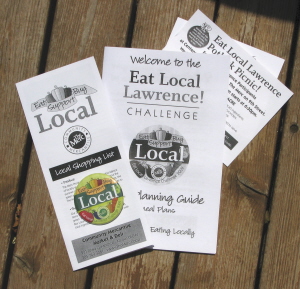 Meanwhile, I’m not sure if you can still sign up for the Lawrence challenge, but those who did (do?) get a button, a menu planning guide and a list of locally produced items available at the Merc. Many of those items are on my Local Sources page, and look there if you want links. (I don’t have time to insert them in this post.) And fresh produce and meats are available at the Lawrence Farmers Market. See the Local Sources for other locally owned markets that offer local foods.
You won’t go hungry if you go totally local. Here are food items that the Merc’s flier lists, in addition to produce and Merc Deli & Bakery items marked with Buy Local stickers. Even if you aren’t in Lawrence, I’ll bet there’s a lot more local food available than you realize. Of course, not all local food is produced in harmony with the environment and ethical treatment of workers and animals, but if your food is local, it’s a lot easier to find out.
Deli area
- Goatsbeard Farm Cheeses
- Alma Cheeses
- Le Petit Garden Fresh Salsas
- Perez Corn Tortillas
- Treehouse Berry Farm Fresh Salsas
- Treehouse Berry Farm Gazpacho
Meat area
- Cedar Valley Farm Chicken, Duck, Lamb
- Creekstone Farm Beef
- Gingerich Farms Ground Turkey
- MJ Ranch Frozen Ground Beef
- New Grass Bison Frozen Buffalo Meat
- New Grass Bison Jerkies & Snacks
- Parthian Foods Pomegranate Walnut Entree Sauce
- Wakarusa Ridge Ranch Beef
Groceries
- Anthony’s Beehive BBQ Sauce
- Arthur Bryant BBQ Sauces
- Cowtown BBQ Sauce
- Daniels BBQ Sauce
- Hillsdale Bank BBQ Sauce
- Jan’s Organic World BBQ Sauces
- Night of Living Dead BBQ Sauce
- Boulevard Brewing Co. Pale Ale Mustard
- Pain is Good Hot Sauces
- Pain is Good Steak Sauces
- Fiesta Artichoke Spinach Dip
- Fiesta Raspberry Jalapeno Sauce
- Fiesta Salsas
- Jan’s Organic World Salsas
- Jumpin’ Jack Salsas
- Margarita Salsas
- Old Fart Salsas
- Pain is Good Salsas
- Pendleton’s Blue Com Chips
- Senor Stan Salsas
- Silva’s Corn Chips
- Treehouse Berry Farm Salsas
- Jan’s Organic World Salad Dressings
- Mama Capri’s Salad Dressings
- Treehouse Berry Farm Chutneys
- Tripti’s Chutneys
- Lost Trail Sodas
- Anthony Beehive Honey
- Little John Sherwood Farm Blackberry Syrup
- Sweetheart Honey
- Mama Capri’s Bruschetta Sauce
- Cascone Pasta Sauces
- Cascone Pizza Sauces
- Cupini Pasta Sauce
- Garezzo’s Pasta Sauce
- Jan’s Organic World Pasta Sauces
- Mama Capri’s Pasta Sauces
- My Neighbor Stan’s Pasta Sauce
- Bilardo Brothers Meat Rubs
- Pantry Shelf Muffin & Cake Mixes
- Treehouse Berry Farm Raspberry Vinegar
- Grandma Hoemer’s Applesauce
- Grandma Hoemer’s Preserves
- Treehouse Berry Farm Jams & Jellies
- Good Dog Biscuits and Treats
- Henderson Farm Dog Shampoo Bar
Bulk
- Annie’s Candied Orange & Lemon Peel
- Dried Mushrooms
- Hawley Honey
- Locally Roasted Coffees
- Locally Supplied or Blended Teas
- Missouri Pecan Brittle
- Missouri Pecans
- Rocket Man Crunch Candies
- Soaring Eagle Farms Whole Wheat Flour
Frozen foods
- Ancient Grains Amaranth Pizza Crust & Flatbread
- Ancient Grains Cookie Dough
- Ancient Grains Good Morning Millet Patties
- Ancient Grains Millet Carrot Bread
- Ancient Grains Pre-Baked Cookies
- Ancient Grains Sunny Millet Bread
- Bread of Life Spelt Pizza Crust
- Pieroguy’s Pierogies
- V’s Tortellini
Bread aisle
- Bread of life Breads, Muffins & Cookies
- Bread of life Cookie Mixes
- Bread of life Granolas
- Farm to Market Breads
- Goucher’s Peppernuts
- Grace’s Best Sunflower Seed Cookies
- Hometown Granolas
- Jerusalem Bakery Pita Breads
- Acme Grains Flour
- Acme Grains Sorghum Flour
- Acme Grains Wheat Berries
- Wheatfields Breads
- Yummy’s Pita Chips
Refrigerator case
- Eggs
- Green Hills Harvest Milk
- lwig Butter
- Iwig Cream
- Iwig Milk
- Central Soy Products
- Jerusalem Cafe Products
- Le Petit Garden Products
- Lebanese Flower Products
- Mediterrean Market Products
- Mohamed’s Products
- Tripti’s Flat Breads
- Yummy’s Choice Products
At checkout
- Marcon Pies
- Nut Nation Smoked Pistachios
- Oak Ridge Farm Inoculated Shiitake Mushroom Log
- Sleepy Jean’s Candies
- Tall Grass Toffee


